Why book this evening
Why book this evening
You're booking the room, not the kitchen
This is a loud, crowded, crowd-pleasing Plaka night, and the reviews are consistent about what it's for: the music, the dancing, and a room full of strangers who end up on their feet together. It is not a quiet dinner and it isn't fine dining — book it for the evening it is, not the one the name might suggest.
A three-course dinner, no surprises
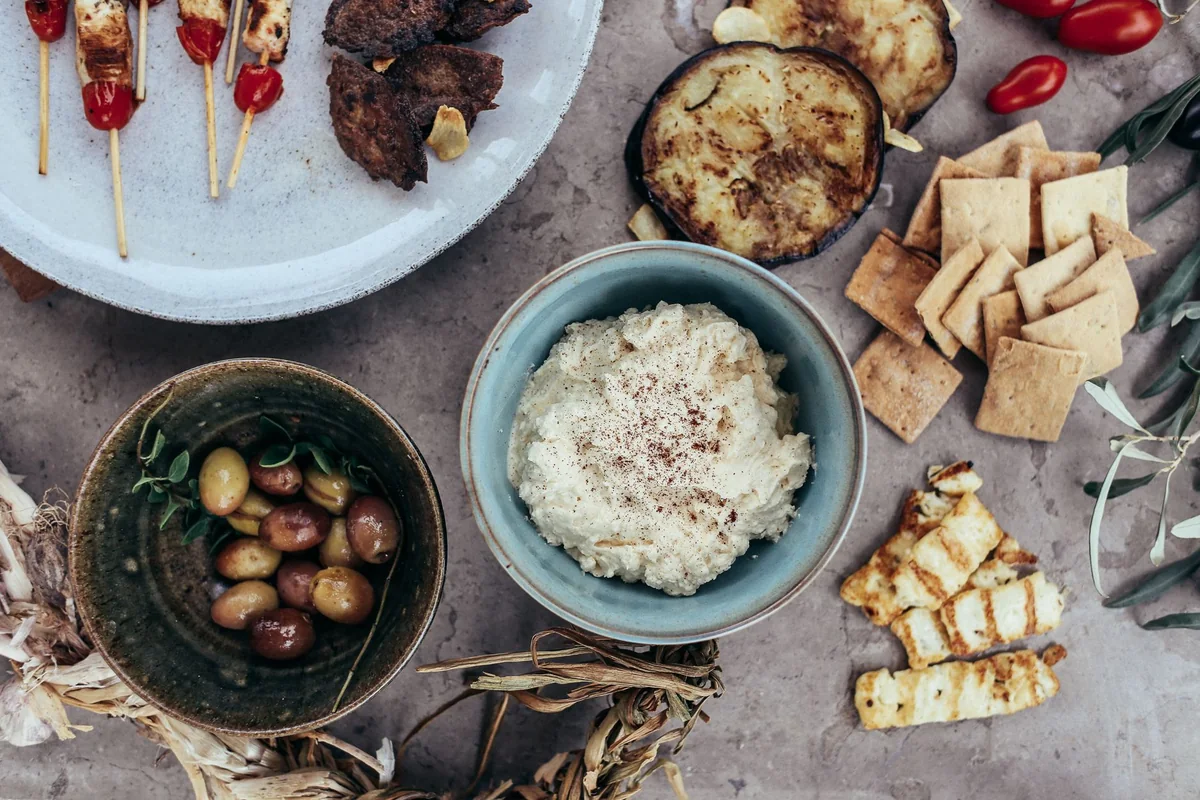
Dinner is a straightforward three-course Greek meal — a starter, a main built around dishes like moussaka or souvlaki, and something sweet to finish — rather than a tasting menu or a chef's showcase. Reviewers rate it as decent, filling taverna food; nobody is claiming it's the reason to come.
The dancers do the recruiting
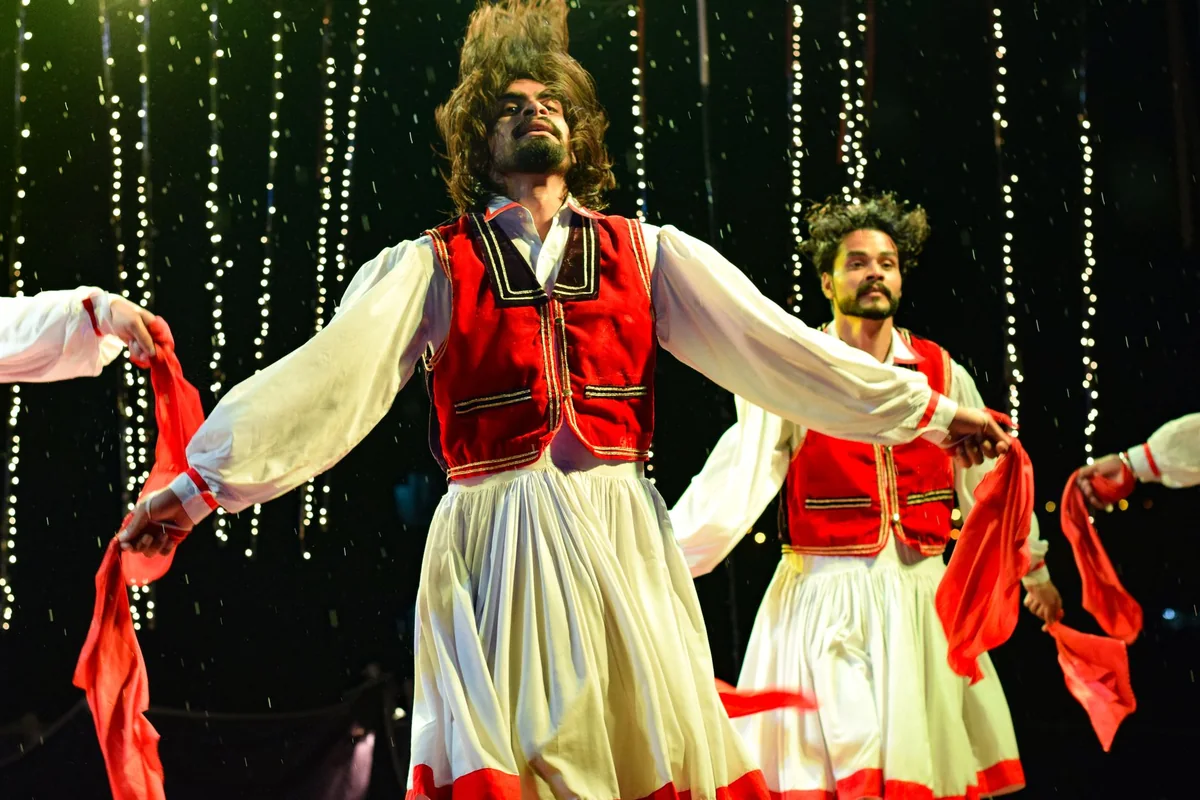
A costumed troupe and a live band work the floor between courses, building from the slower solo turns to the faster circle dances, and by the finale they're pulling guests up from the long tables rather than performing at them. This is the part of the night every positive review mentions first.
The drive is part of the evening, not a delay
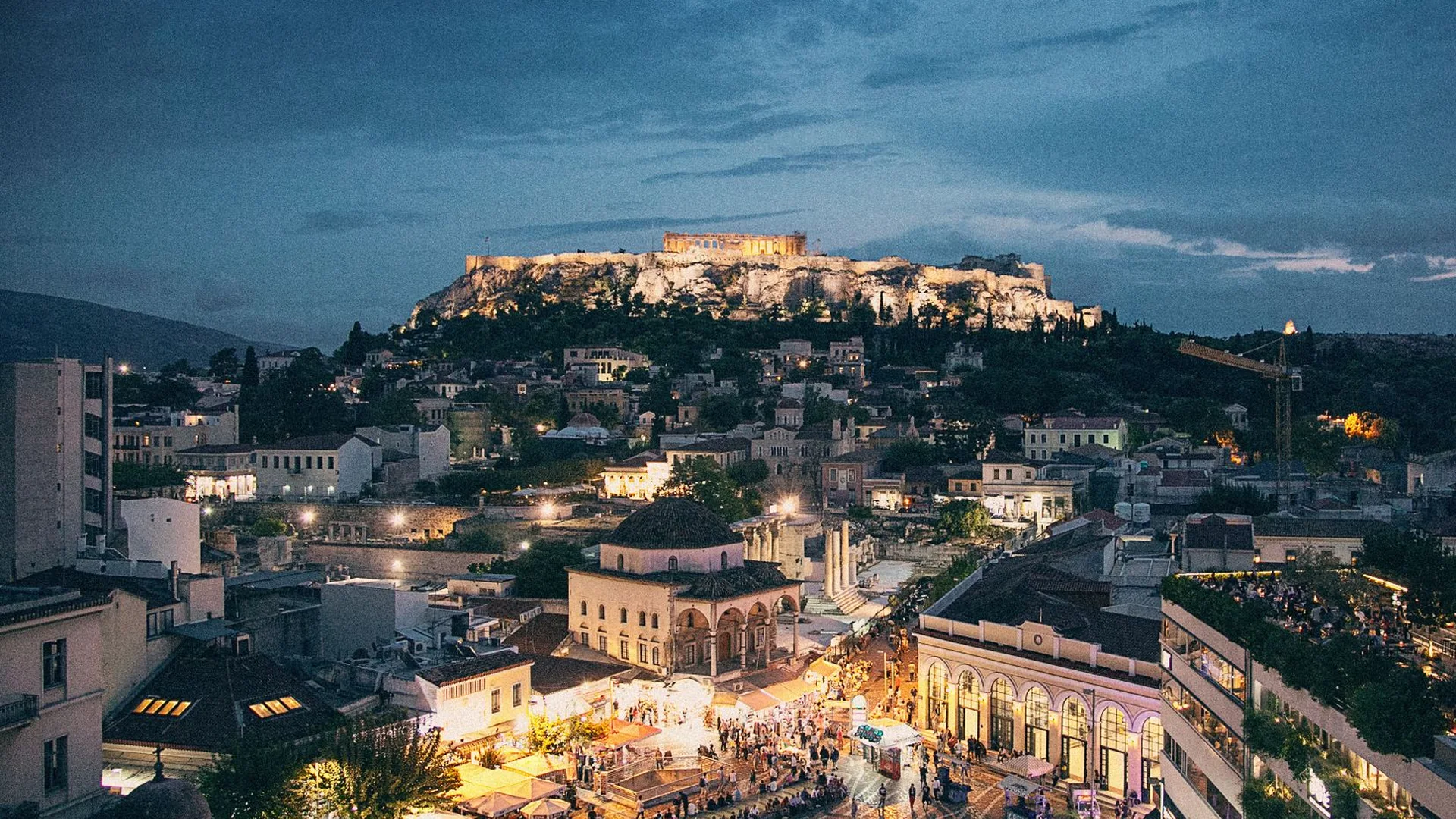
Pickup includes a drive across the city with the Acropolis lit up on the hill, then a guided walk down through Plaka's lanes before the tables. Treat the road time as the overture rather than dead time — it's the only part of the night with a fixed schedule that traffic can stretch.
How the night unfolds
How the night unfolds
A set shape, night after night, even though the exact songs and dishes vary with the troupe and the kitchen on duty.
- Pickup
The drive in, Acropolis lit up on the hill
Your driver collects you from your hotel and drives across the city; on a clear night the floodlit Acropolis is visible from the road for a stretch before you're dropped near Plaka.
- The lanes
A stroll through Plaka at dusk
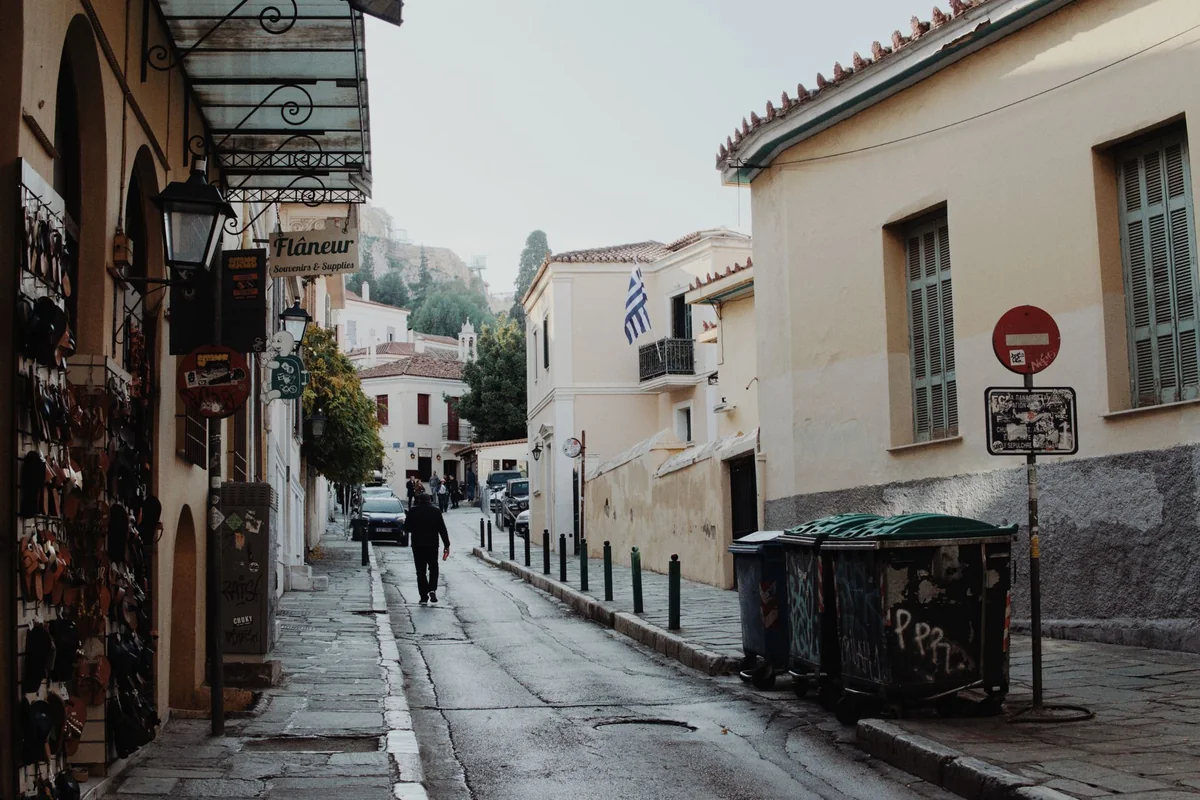
A short guided walk down through Plaka's narrow, sloping lanes — shopfronts, lit tavernas, the odd bouzouki drifting out of a doorway — before you're seated.
- The tables
Long shared tables, the first course arrives
Seating is at long communal tables rather than private tables for two, and the first of the three courses is served not long after you sit down.
- The band starts
The troupe comes in between courses
Musicians and a costumed dance troupe start working the room while the meal continues — the show runs through dinner rather than after it.
- The set builds
From the solo turns to the full circle
The programme typically moves from a slower, more introspective solo dance through to faster circle dances, region by region, building toward the loudest point of the night.
- The finale
Plates, and the room on its feet
The night usually finishes with a plate-breaking flourish and guests pulled up from the tables to join the last dances, before the drive back out into the lanes.
What you'll actually see danced
What you'll actually see danced
Neither GetYourGuide nor the taverna publishes a fixed running order for this evening, so this is the repertoire a Plaka dinner show like this one typically draws from — six dances, from six very different corners of Greek history, checked against their own regional origins rather than guessed at.
- 1
Zeibekiko — Asia Minor & the rebetiko cafes
A solo, largely improvised dance with no fixed steps, danced in a space barely a metre wide — it began with the Zeybek irregulars of Ottoman Anatolia and came to Greece with the 1922 refugees from Smyrna.
- 2
Kalamatianos — The Peloponnese
Greece's best-known circle dance, named for Kalamata: twelve steps to a bar, danced hand-in-hand in a slowly turning chain — the dance most Greeks would teach a visitor first.
- 3
Pentozali — Crete
A fast, high-jumping war dance from Crete, said to have been danced before battle — dancers link shoulders in a loose circle while the lead pair breaks off for the acrobatics.
- 4
Tsamiko — Epirus & the mainland
A slow, stately mainland dance tied to the klephts of the 1821 war of independence, danced for style and posture rather than speed, with the lead dancer breaking into a scissor-kick leap.
- 5
Pontian dances — Pontus, the Black Sea coast
Danced in a tight, fast, closed circle — unusually close for a Greek dance — to the piercing three-string Pontic lyra, brought to Greece by refugees from the Black Sea coast of Anatolia.
- 6
Hasapiko → Sirtaki — A film set, 1964
The dance most visitors expect is the youngest one here: sirtaki was choreographed for the film Zorba the Greek, blending the old butchers' hasapiko with a faster dance so Anthony Quinn could dance it on an injured foot. It's the invented one — and usually the one that gets guests on their feet.
The exact set list and its order changes by night and by troupe — treat this as the vocabulary of the evening, not a guaranteed running order.
Plaka, and getting there
Plaka, and getting there
Plaka is Athens' old town, a tangle of narrow, sloping lanes directly below the Acropolis — not somewhere most visitors would find the actual taverna without a guide.
Where it is
The evening is held at a taverna in or near Plaka; GetYourGuide doesn't name the venue on the listing, and neither do we — you'll find out on the night.
Pickup and drop-off are included
This booking includes hotel pickup and drop-off, with a drive across the city and a short guided walk through Plaka's lanes before you're seated.
Traffic is the real variable
The drive in crosses central Athens at the evening's busiest hour; give the pickup window room and treat any wait as ordinary Athens traffic rather than something gone wrong.
What the evening is not
This is a big, loud, tourist-facing taverna evening built around a long shared table, not a quiet neighbourhood dinner or a formal restaurant — book it knowing that's the room you're walking into.
The evening, in pictures
The evening, in pictures
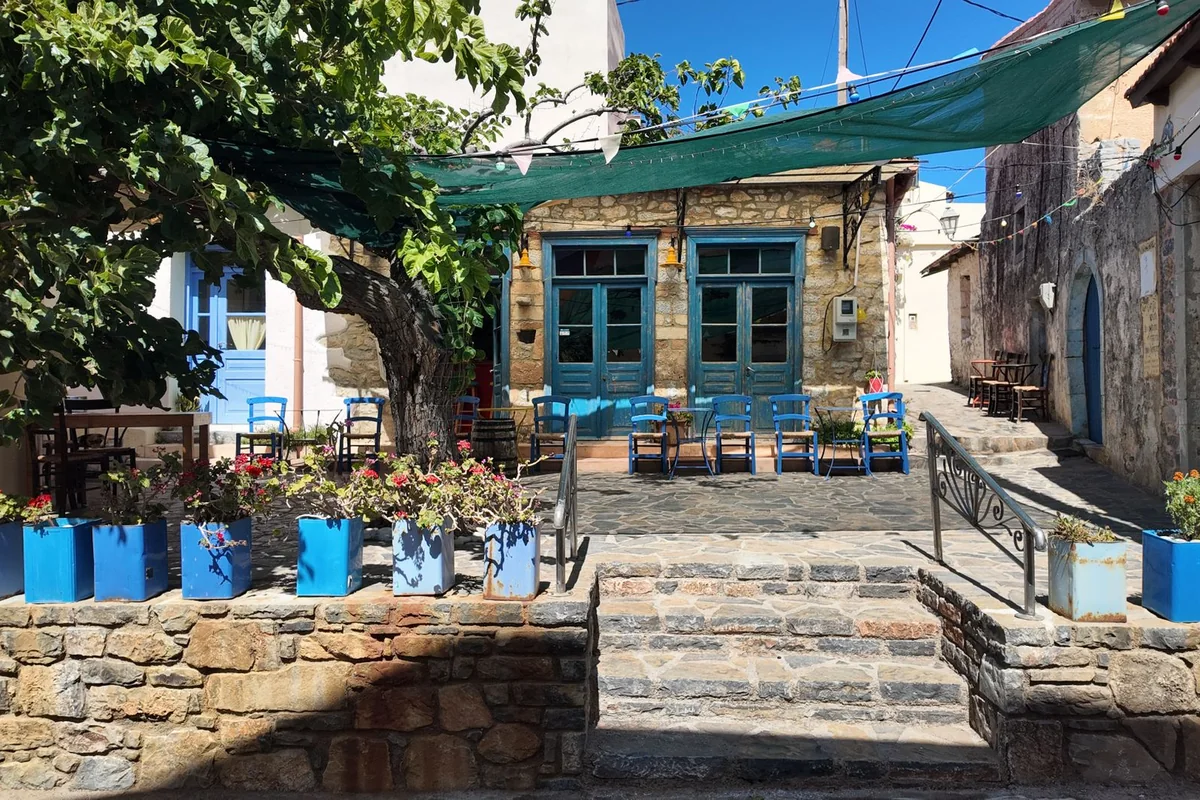
Greek folk dance, taverna food and Plaka's lanes below the Acropolis — representative photographs of the city and the tradition, not of this specific taverna, its dancers or its dishes.
Booking options & what's included
Booking options & what's included
| Option | What it includes | Good to know |
|---|---|---|
| Dinner, show & hotel pickup | Three-course dinner, live music and dance, hotel pickup and drop-off | The listing this site is built around — simplest for an evening that ends after dark |
| Child pricing | The same evening at a reduced rate for younger guests | Age cut-offs are set by the operator — check the current bands on the listing before booking |
| Larger groups | The full evening for several guests seated together | Long shared tables suit big groups and celebrations; check the listing for a maximum party size |
| Pair it with an Acropolis day | Booked as a separate GetYourGuide experience | The evening pickup leaves the whole day free for the Acropolis and the museums |
Ways to book the evening
Find a table for your dates
Every option below is booked through GetYourGuide, with live availability and the final price in your own currency.
Planning your evening
Planning your evening
Take the earliest pickup slot you can
Every pickup on the route shares the same fixed show start — book early in the evening's pickup window and you buy back table time that a later slot loses to traffic, not the other way round.
Eat the meal for what it is
This is taverna food for a big room, not a chef's tasting menu — reviewers who arrive expecting the former are the ones who come away disappointed; arrive expecting the latter and it does the job.
Wear something you can dance in
The finale regularly pulls guests up from the tables — flat, comfortable shoes and clothes you don't mind moving in beat anything you'd pick for a formal dinner.
Carry a little cash for the finale
Plate-breaking at Greek tourist tavernas is normally done with special break-plates bought on the spot rather than the crockery you ate off — a few coins or notes in a pocket means you're not caught out if the moment comes.
Planning a night out in Plaka
Planning a night out in Plaka
The Plaka dinner show, hour by hour
A drive past the lit Acropolis, a walk down through Plaka, a three-course dinner at a long shared table, and a troupe who won't let the room stay seated — here is the shape of the night, in order.
Read more →The dances, explainedZeibekiko to sirtaki: the dances you'll see at a Plaka dinner show
Six dances, six different corners of Greek history — what each one actually is, where it comes from, and which one is younger than it looks.
Read more →The menu, plainlyWhat the three courses actually are at a Plaka dinner show
This isn't a tasting menu and nobody is claiming it is — here's what a straightforward three-course taverna dinner in Plaka actually looks like, and how to think about it before you book.
Read more →Plate-smashing, tips, photosPlate-smashing, tipping and photography at a Plaka dinner show
The practical questions the listing doesn't spell out: whether the plates are real, whether you're expected to tip, and how to take photos without getting in the dancers' way.
Read more →Who it suitsIs the Plaka dinner show right for you? Groups, families, solo travellers
What the 3.7-star rating is actually telling you, who consistently has a good night, and who should book something else instead.
Read more →Around AthensAthens evenings beyond the Plaka dinner show
One dinner-and-dance night takes about three hours. Here's how it sits alongside the rest of an Athens trip, and where to look if you want the folk dancing without the dinner.
Read more →FAQ
Plaka dinner show questions
What is the Traditional Greek Show in Plaka with dinner?
It's an evening at a Plaka-area taverna combining a three-course Greek dinner with live folk music and a costumed dance troupe who perform through the meal and invite guests to join the final dances. Hotel pickup and drop-off are included, with a drive past the illuminated Acropolis on the way in.
What is the food actually like?
It's a straightforward three-course taverna meal — a shared starter, a main usually built around moussaka or souvlaki, and a sweet to finish — rather than a chef's tasting menu. Reviews describe it as decent, filling food; the evening is booked for the room and the dancing rather than the cooking.
Will I be expected to get up and dance?
Nobody is pulled up against their will, but the troupe does actively invite the room to join the later, faster dances, and most reviews describe a good share of the tables ending up on their feet. If you'd rather watch, staying seated is entirely normal too.
Is there plate smashing?
Plate-breaking is a standard finale at this kind of Plaka taverna evening, using special break-plates made for the purpose rather than real crockery — real plates have been off-limits at Greek venues since 1969. Whether it happens on any given night is down to the troupe on duty.
What dances will I actually see?
Programmes for this kind of evening are usually drawn from across Greece — Peloponnese circle dances like kalamatianos, Cretan pentozali, mainland tsamiko, Pontic dances from the Black Sea coast, the Asia Minor solo zeibekiko, and the modern sirtaki created for the film Zorba the Greek. The exact running order isn't published and changes by night.
How long does the evening last, and what if my pickup runs late?
The whole evening runs about three hours door to door, including the drive. The show itself starts at a fixed time regardless of pickup delays, so guests collected later on the route get less time at the table before it begins — Athens traffic, not the taverna, is usually the cause.
Is this suitable for children and families?
The format — long shared tables, a loud room, food arriving in courses, and dancing rather than a seated show — works reasonably well for families, though it runs late and isn't a quiet meal. Check the current age pricing on the listing if you're booking for children.
Can I cancel if my plans change?
The listing offers free cancellation up to 24 hours before the start time for a full refund, and many options let you reserve now and pay later. The exact cancellation terms for your booking are shown on GetYourGuide before you pay.